Notes from production.
Real write-ups on the systems I build — booking engines, Shopify apps and admin panels, and the unglamorous work of rescuing legacy .NET. No fluff, no listicles for their own sake.

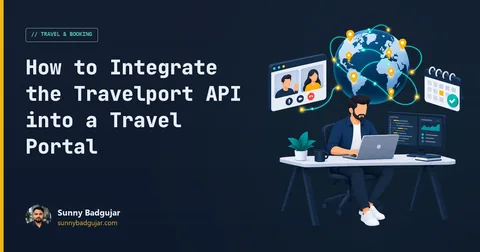
How to Integrate the Travelport API into a Travel Portal
Galileo, Apollo, Worldspan, Travelport+: one GDS, two API families. Universal API vs JSON APIs, access groups and PCCs, 24-hour tokens, the search-price-workbench-ticket flow and the timers that come with it.
Read the write-up →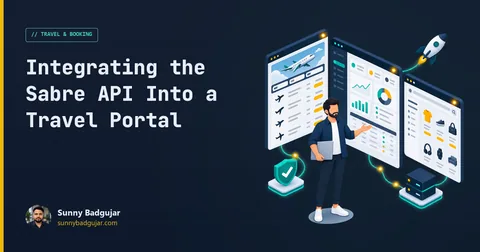
How to Integrate the Sabre API into a Travel Portal
No self-service tier, a mix of SOAP and REST, and agency settings that matter as much as code. Credentials and PCCs, tokens and session pools, the search-revalidate-book flow, NDC content and API version retirements.
Read the write-up →
Developer Left Mid-Project? How to Take Over an Unfinished App
Your developer stopped replying and the app is "80% done." What to secure in the first 48 hours, what a new developer should check before writing any code, and how to decide whether to finish, fix or rebuild.
Read the write-up →
How to Add Hotel Booking to Your Travel Portal (Hotel APIs Explained)
It looks like one more API, but hotel content behaves nothing like flights. Where hotel inventory comes from (GDS, bedbanks, direct connections), the mapping, rate re-checks and cancellation rules that make it work, and a phased way to launch it.
Read the write-up →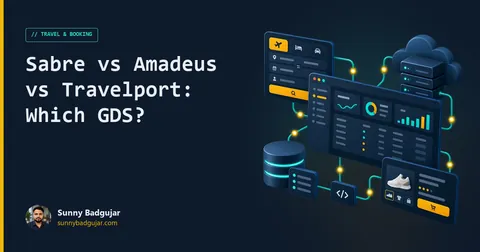
Sabre vs Amadeus vs Travelport: Which GDS Should Your Travel Portal Use?
They get compared as if one is simply "the best" — they aren't ranked that way in practice. How the three big GDSs actually differ on coverage, content, access and cost, and how to pick the right one for your portal, from someone running a live multi-GDS platform.
Read the write-up →
How Long Does It Take to Build a Shopify Store?
A few days to a few months — but the biggest variable isn't the code, it's how ready you are. A realistic phase-by-phase timeline, the levers that stretch it, and the one thing on your side of the table that decides whether you launch on time.
Read the write-up →
How Much Does It Cost to Build a Shopify Store?
"It depends" isn't a dodge — a Shopify store's price is set by choices you make before any code: theme vs custom design, how big your catalog is, the features themes can't do, and whether you're migrating. Here's what actually drives the number, and how to keep it down.
Read the write-up →
How Much Does a Custom Shopify App Cost?
Everyone wants one number, but "Shopify app" covers a one-screen tool and a product sold to thousands of merchants. What actually moves the price — scope, how deep into Shopify it reaches, whether it needs a backend, and private vs App Store.
Read the write-up →
Why Your Database Gets Slower as It Grows (and How to Fix It)
It was fast on launch day and crawls now that you've grown — and nothing obvious broke. The queries didn't change; the data and the load did. Why databases slow down as they scale, and how to build one that stays fast under load.
Read the write-up →
How to Integrate the Amadeus API into a B2B Travel Portal
Amadeus gives you flights and fares over a clean REST API — but a B2B portal is more than a search box. The auth flow, the search-price-book sequence, and the pieces the docs skip: markup, agent wallets and multi-tenancy.
Read the write-up →
What Does It Cost to Build a Custom Booking Engine?
"It depends" isn't a dodge — a booking engine's price is set by things you can't see from the outside: how many suppliers you connect, how hard the money movement is, and the edge cases nobody demos. Here's what actually drives the number.
Read the write-up →
Why Your SQL Server Database Is Slow (and How to Fix It)
Before you pay for a bigger server: a slow database is almost always a few queries and some missing indexes, not hardware. Missing indexes, N+1 queries, blocking, stale stats — where to look first, cheapest fix to last.
Read the write-up →
How to Integrate Multiple GDS Providers Into One Booking Engine
Amadeus, Sabre, Travelport and direct supplier feeds all speak different languages. Here's the architecture that lets one booking engine talk to all of them — normalisation, fan-out search, price drift, failover and refunds.
Read the write-up →
Shopify Admin Panel vs Public App: Which One Do You Actually Need?
Custom app, public App Store app, or an internal admin tool? They sound similar and cost very differently. A plain-English guide to picking the right build before you spend a rupee — or a dollar.
Read the write-up →
7 Signs Your Legacy .NET Application Needs Rescuing
Ageing ASP.NET apps rarely fail all at once — they get slow, fragile and scary to touch. Here are the seven warning signs, and how a structured rescue (audit, stabilise, modernise) actually works.
Read the write-up →Got a system like the ones I write about?
Whether it's a booking engine, a Shopify build or a legacy app that needs rescuing — tell me what you're working with.